The Queen Elizabeth Hospital (QEH) is celebrating the contribution of Dr Gillian Birchwood to the…
QEH Security Officers Recognised After Completing Specialised Training
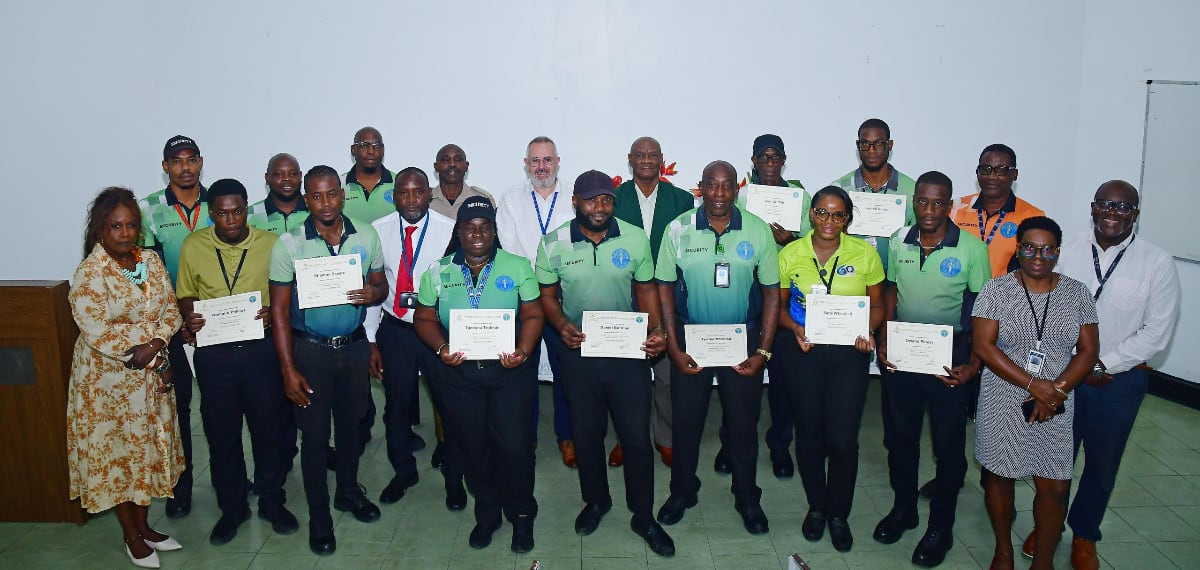
Members of the Queen Elizabeth Hospital’s Security Department have been presented with certificates after successfully completing baton and handcuff training designed to strengthen their ability to manage challenging situations safely, lawfully and professionally.
Speaking during the certificate presentation ceremony, the hospital’s Chief Executive Officer congratulated the officers and described the training as an important investment in their safety and the safety of patients, visitors and staff.
The CEO praised the security team for the professionalism, composure and respect its members demonstrate while carrying out a demanding—and often unseen—role within the hospital.
“Since arriving at QEH, I have spent time getting to know many of you, and I have seen first-hand the professionalism, calmness and respect that you bring to what is often a very challenging role,” the CEO said.
“You have built a reputation as a team that is approachable, helpful and prepared to step in when others need support. I know that much of the excellent work you do goes unseen, but it does not go unnoticed.”
The officers were reminded that the training was intended to equip them with the confidence, practical skills and sound judgement needed to respond appropriately when difficult situations arise. Communication and de-escalation remain the officers’ primary tools, while batons and handcuffs are to be used only as a last resort and when necessary to protect patients, visitors, employees or the officers themselves.
“This training is not about using force,” the CEO stressed. “It is about giving you the confidence, skills and judgement to manage difficult situations safely, lawfully and with the minimum force necessary.”
The CEO also disclosed that the QEH is exploring the introduction of body-worn cameras as an additional measure to support and protect security personnel.
The cameras could provide an objective record of incidents, help to deter aggressive behaviour and assist with the gathering of evidence when necessary. They could also provide reassurance to employees by creating an independent record of their response when an incident occurs.
“These are not about monitoring our staff—they are about supporting and protecting you,” the CEO explained. “They protect you just as much as they protect the public.”
Security officers play an essential role in maintaining an environment in which the QEH’s clinical and support teams can care for patients safely. Their work regularly brings them into contact with people experiencing distressing and emotionally difficult circumstances, making professionalism, good judgement and empathy critical to their duties.
The CEO thanked the officers for their commitment, professionalism and willingness to develop their skills, while reaffirming the hospital’s responsibility to invest in and support the team.
Special thanks were also extended to the Superintendent of Prisons and the Barbados Prison Service for facilitating the partnership and training, and for supporting the QEH’s efforts to strengthen the safety of its staff and patients.
Related Posts