The Queen Elizabeth Hospital (QEH) is celebrating the contribution of Dr Gillian Birchwood to the…
Getting Better Together: QEH Calls for Public Support to Ease A&E Pressure
The Queen Elizabeth Hospital (QEH) is appealing for greater public cooperation as it continues to manage a significant surge in patients at its Accident and Emergency Department (AED), placing increased pressure on admissions, bed availability and waiting times.
At an urgent news conference today, QEH Chief Executive Officer Neil Clark, Acting Chief Operations Officer and Director of Medical Services Dr. Carlos Chase, Head of the AED Dr. Anne-Marie Cruickshank, and Director of Clinical and Diagnostic Services Dr. TMH Corey Forde outlined the challenges facing the hospital and the important role Barbadians can play in easing the pressure.
As of November 1, more than 55 patients were awaiting medical assessment in the AED. While life-threatening cases continue to receive priority under the hospital’s triage system, patients with less urgent conditions may experience longer waits.
What’s Driving the Increased Demand?
Dr. Cruickshank identified four major contributing factors:
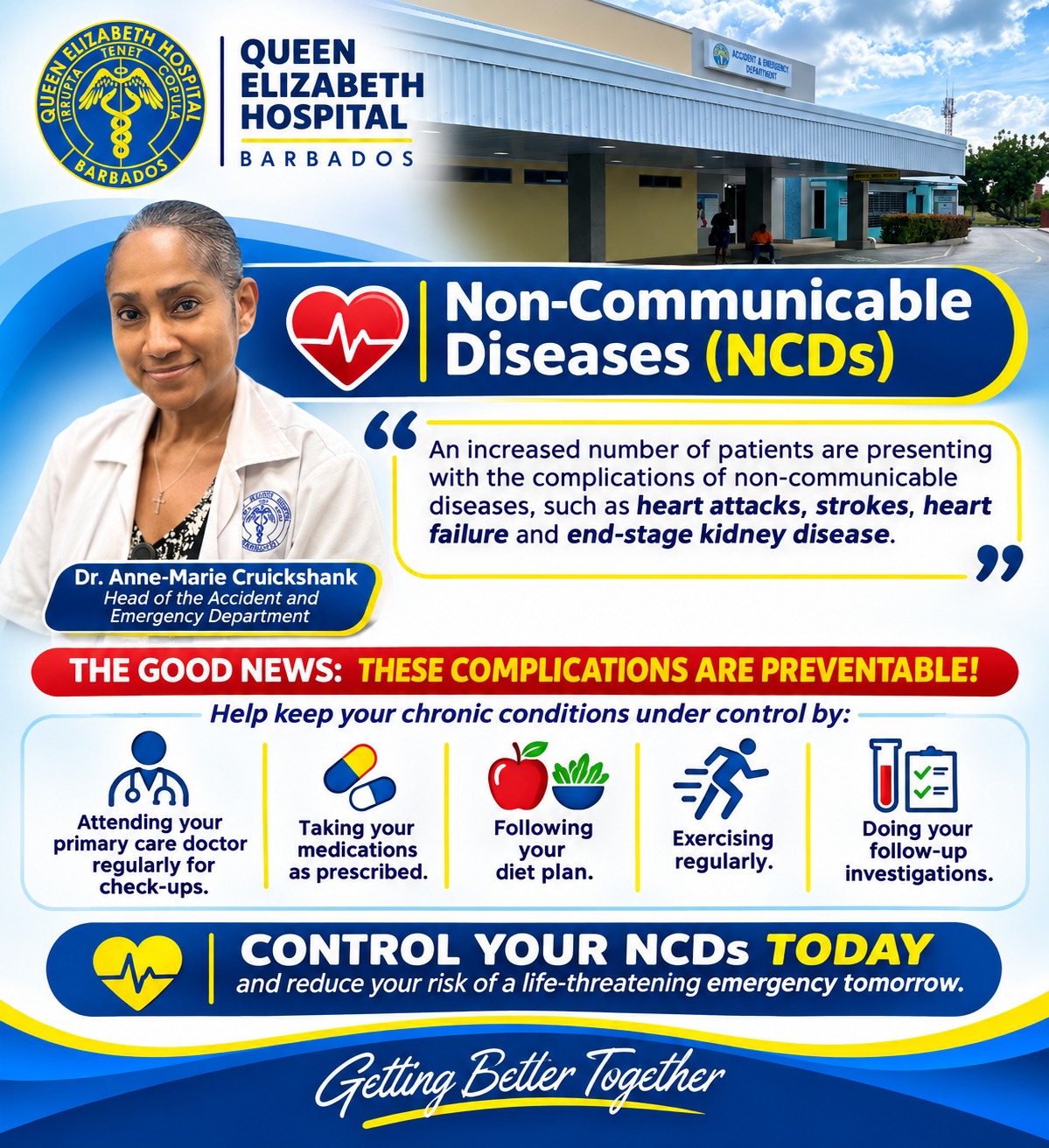
- Complications from Non-Communicable Diseases (NCDs)
An increasing number of patients are presenting with complications such as heart attacks, strokes, heart failure and end-stage kidney disease. The public is encouraged to manage chronic conditions through regular medical check-ups, prescribed medications, healthy diets, exercise and recommended follow-up investigations.
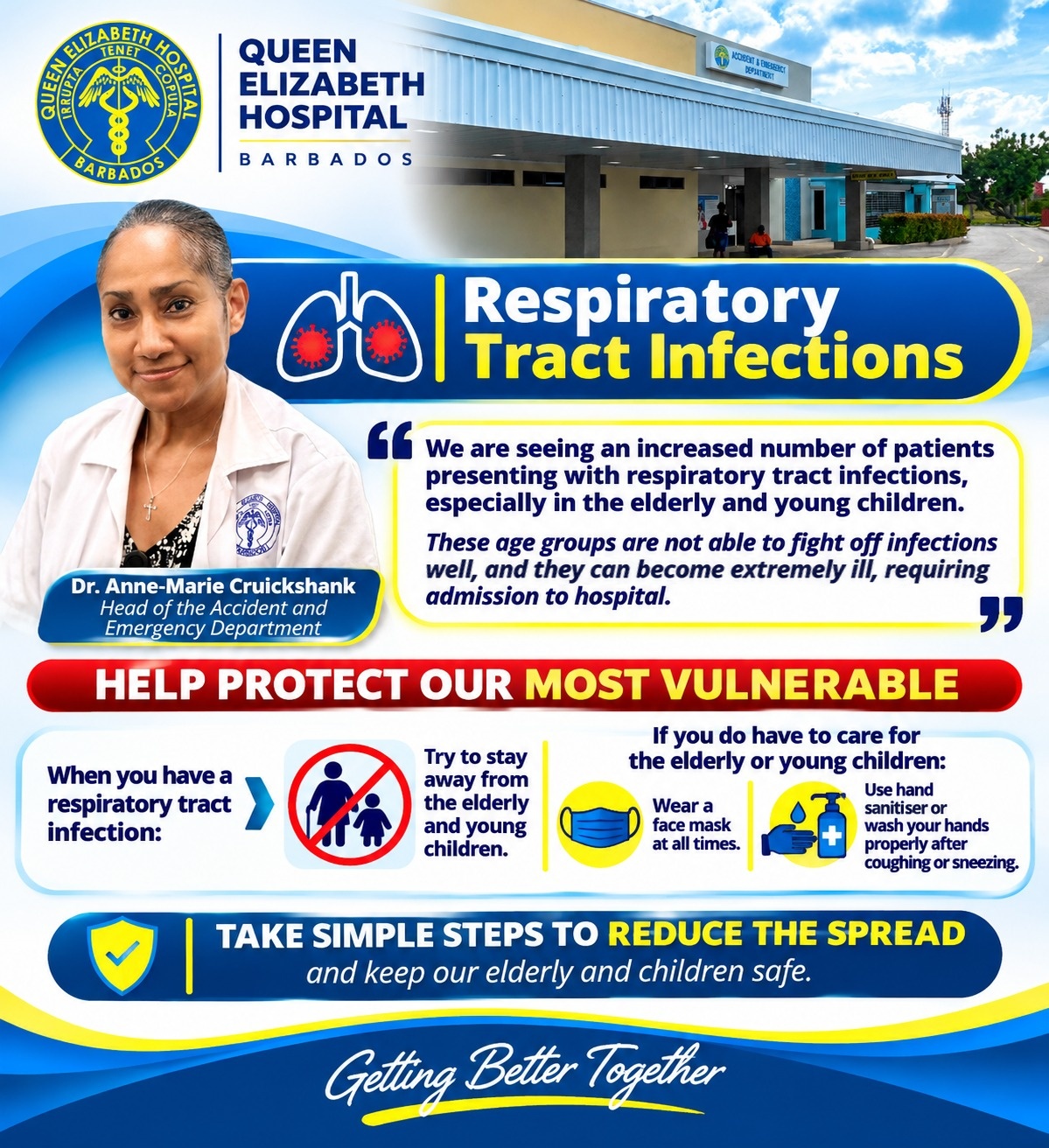
- Respiratory Tract Infections
Increased respiratory illnesses, particularly among elderly persons and young children, are also contributing to hospital admissions. Persons experiencing respiratory symptoms should avoid close contact with vulnerable individuals where possible, wear masks when providing essential care and practise proper hand hygiene to help prevent the spread of infection.
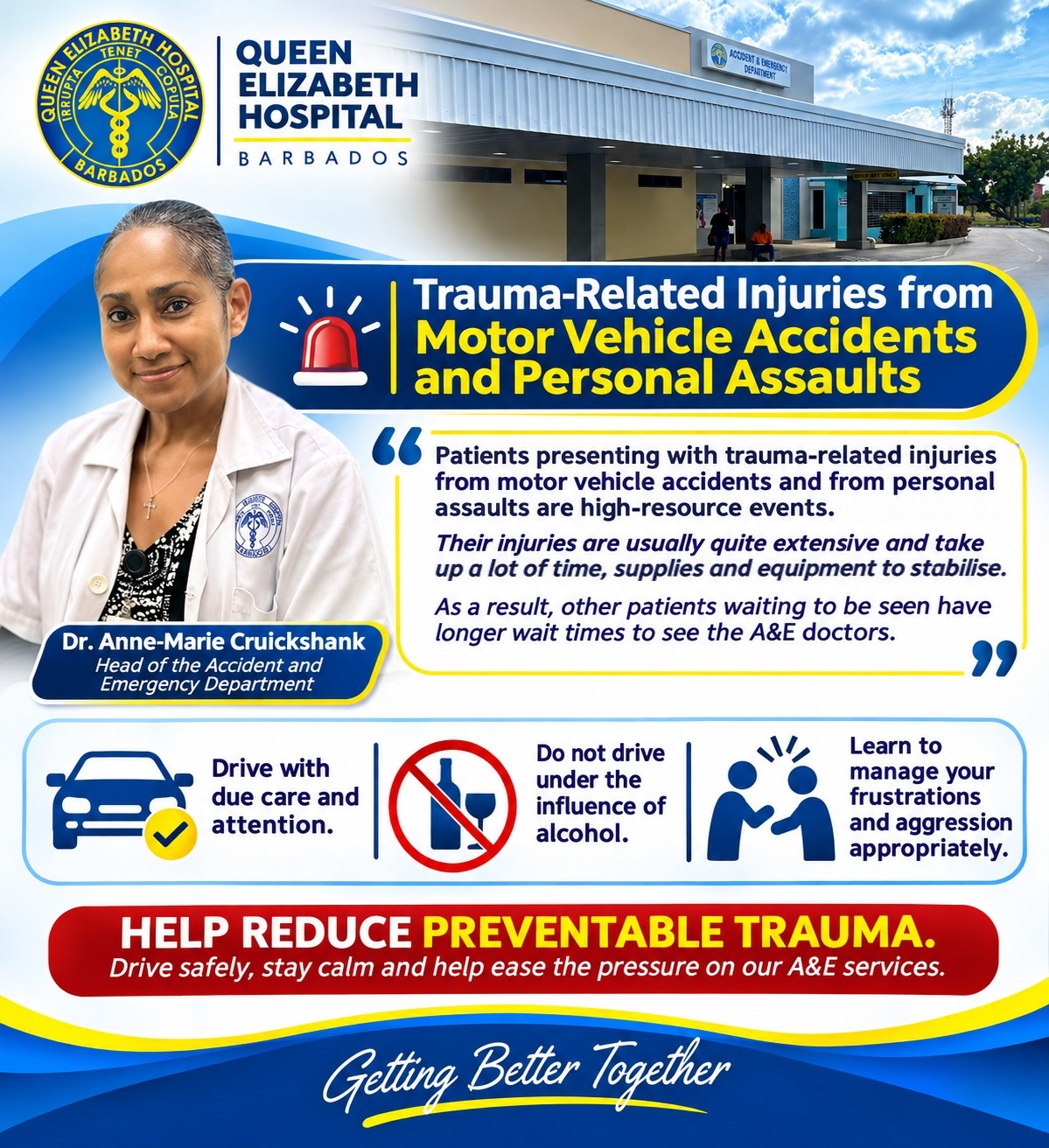
- Road Traffic Accidents and Personal Assaults
Serious trauma cases require considerable medical resources, equipment and time, contributing to longer waits for other patients. The QEH urges Barbadians to drive responsibly, never drive under the influence of alcohol and resolve conflicts peacefully.
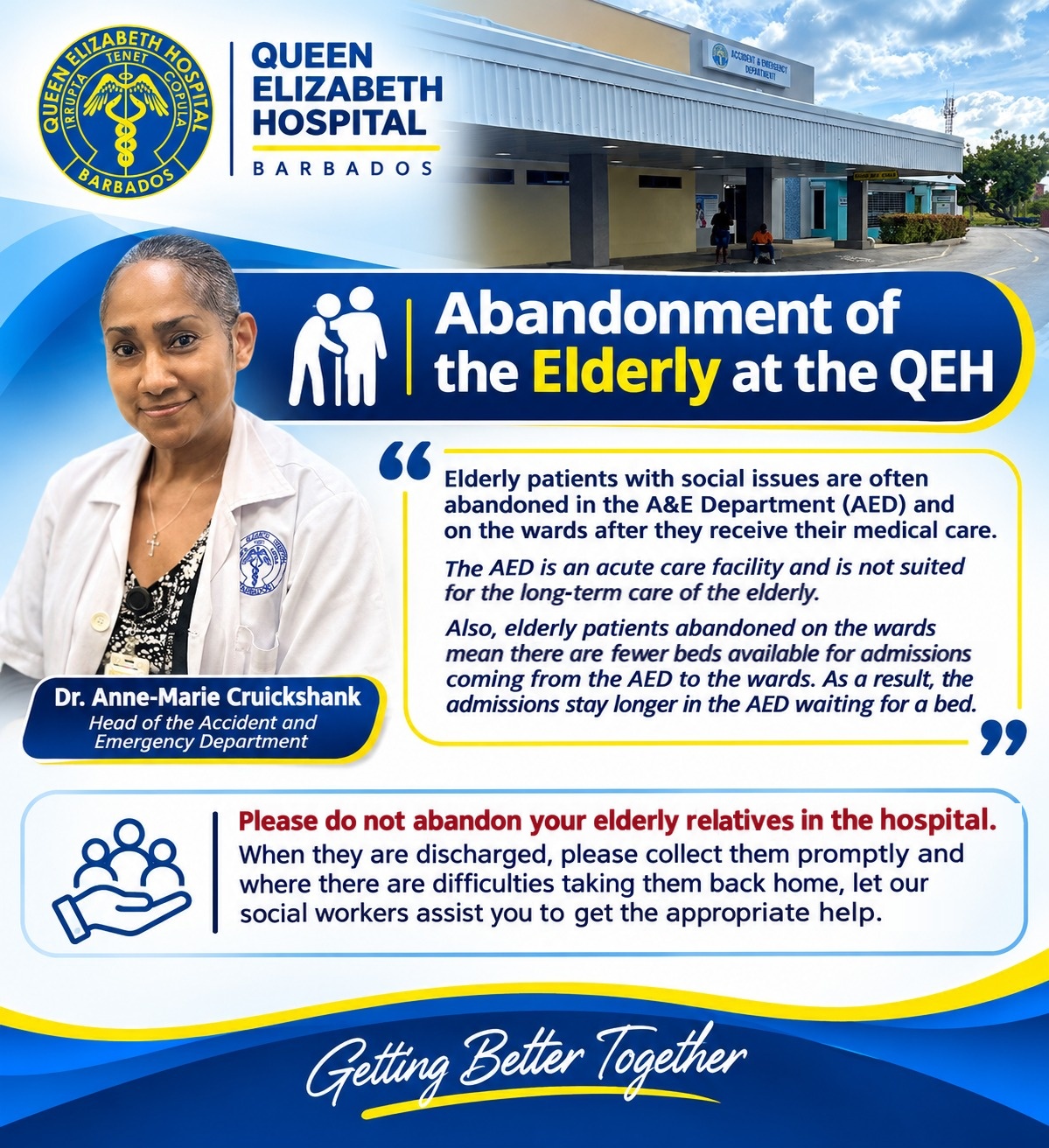
- Delayed Collection of Elderly Patients Following Discharge
Elderly patients remaining in hospital after being medically cleared for discharge contribute to bed shortages and delays in admitting patients from the AED.
Families are encouraged to collect relatives promptly following discharge. Those experiencing difficulties with home-care arrangements should contact the hospital’s Social Work Department at (246) 436-6450 for guidance and support.
Choosing the Right Level of Care
The QEH reminds Barbadians that not every medical concern requires a visit to the AED. For non-emergency conditions, persons are encouraged to consider:
- Winston Scott Polyclinic’s 24-Hour Clinic, Jemmotts Lane, St. Michael.
- Private medical practitioners, where available.
- QEH Patient Advice and Liaison Service (PALS) at 536-4800, via telephone or WhatsApp, for guidance on appropriate care.
Persons experiencing life-threatening symptoms or serious injuries should seek emergency medical attention immediately.
Getting Better Together
The QEH continues to manage increased patient demand while working to improve patient flow, admissions and access to care.
However, the hospital emphasises that easing the current pressures requires a collective effort.
Managing chronic illnesses, preventing infections and injuries, choosing appropriate healthcare services and supporting timely hospital discharges can all make a meaningful difference.
The QEH thanks the public for its patience, understanding and cooperation, and acknowledges the continued dedication of its healthcare teams.
Further public education messages will be shared through the hospital’s official communication channels as part of its Getting Better Together campaign.
Related Posts